
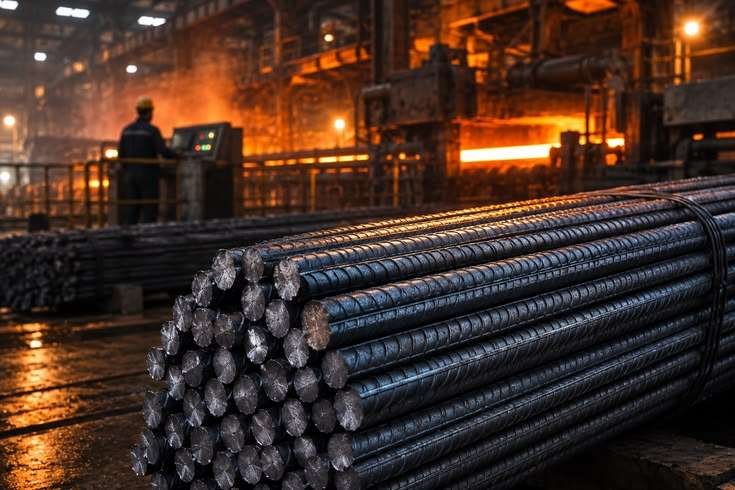
If you want to know in detail how a steel bar is made, then click on our website, Todayalljobs24.
Many companies are looking for people with experience making steel bars. Hire them. In this article, I will explain in detail how steel bars are made so you can apply what you learn.
There are five sections through which a steel bar is produced, such as:
- Pick and Place
- State-of-the-art plant
- Melting Section
- Quality Spectrolab
- C-Section
Pick and Place, State-of-the-Art Plant, Melting Section, and Quality Spectrolab Section. If you want to know more about them in detail, visit our website, Todayalljobs24.
Pick and Place
Here, various components are automatically placed onto the PCB. In this department, the boards are produced—using both manual methods and automated machines—and their quality is subsequently checked. I will now explain the entire process of how a PCB (Printed Circuit Board) is manufactured.
State-of-the-art plant
In the state-of-the-art plant, steel bars of international standard are manufactured using the latest machines, and these steel bars are manufactured from imported scrap. Imported scrap is stored as raw material in the scrap pit, and then this scrap is shifted with the help of a grabber and a heavy magnet machine. It is placed in the vibrator in the melting section.
It is then melted. The special thing is that the scrap is used after quality test approval from an international third party before coming here.
For more details on the plant, visit our website: Todayalljobs24.
Table of Contents
Melting Section
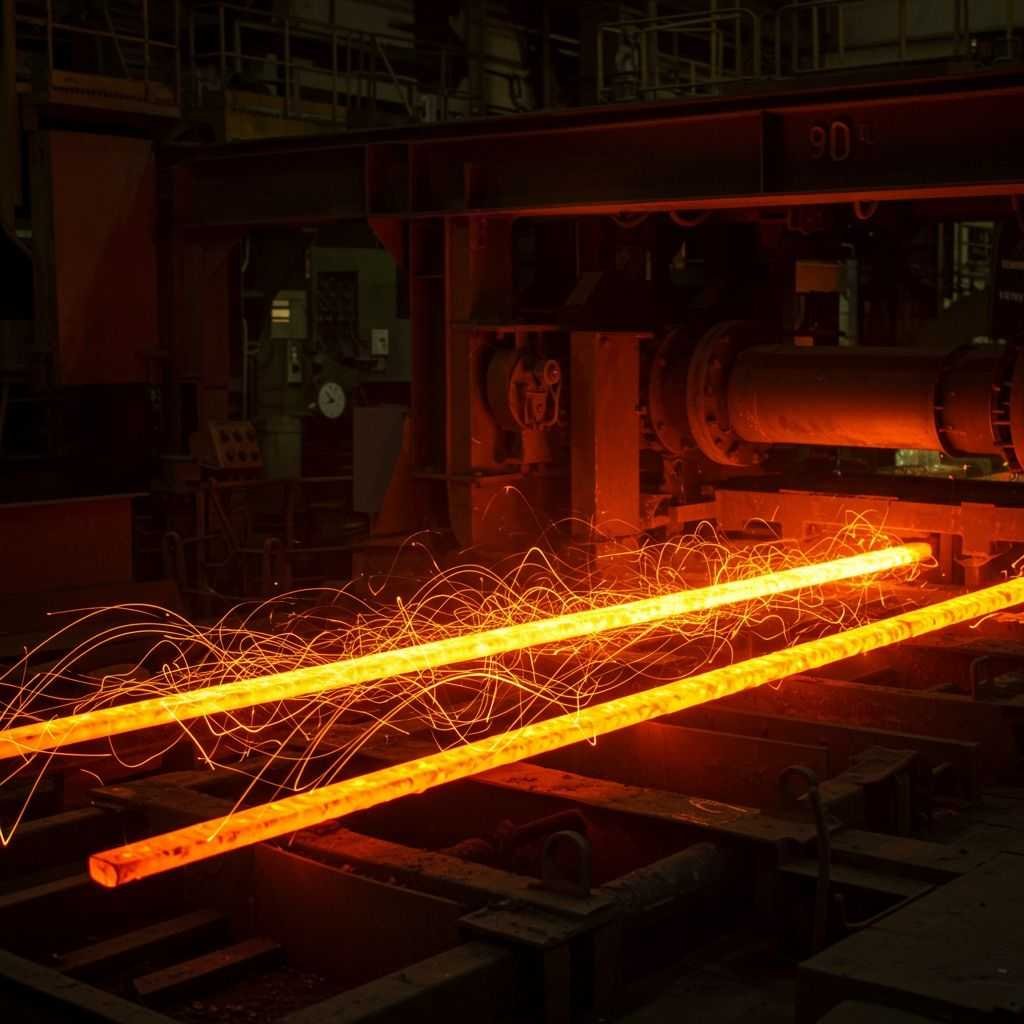
Here, molten metal is produced, so the scrap is moved into this vibrator machine using a grabber or a large magnet, and then it automatically vibrates and feeds the scrap into the furnace. Inside this furnace, it is ignited and pressed at about 1650 to 1750 degrees Celsius, and molten metal is produced.
At this time, the metal is tinted because the contamination on its surface is removed. Interestingly, the process involves four different phases to check its chemical composition; samples are collected and sent to a quality lab, where they are tested using a spectrometer.
The molten metal produced in the melting section undergoes various quality control stages to ensure it meets international standards.
Quality Spectrolab
Two state-of-the-art spectrometers are installed here to regularly monitor the chemical composition of the molten metal. As previously mentioned, sampling occurs at four distinct stages—such as when the furnace is 50% full—to verify the composition and gradually adjust it to meet required international standards; the metal proceeds to the next stage of processing only once it is fully prepared.
A key feature here is the simultaneous use of two spectrometers; this ensures that if a malfunction occurs in one machine, the standby unit can be utilized immediately, thereby preventing any interruption to the quality control process.
So, after receiving quality approval from Spectrolab, the molten metal is transferred into a ladle, which is then automatically transported to the CC section with the help of machines.
If you want to know more about Quality Spectrolab in detail, click on our website Todayalljobs24.
C-section
CC section means the continuous casting section, and you can see here that first this ladle is opened by expert workers, and then the liquid molten metal is poured into this casting machine. Inside this casting machine, the shape of the belt is given to it. This is a very skilled and important task because on one side there is molten metal that has been melted at 1600 to 1700 degrees Celsius, and now it has to be given a solid shape.
For this, the outer surface of the bar is solidified with cold water inside this casting machine. But care is taken to keep the temperature inside it high so that it remains in liquid form so that it can be re-rolled further, and at the same time, the best grade of steel bar is prepared according to the requirements of 60, 72, and 80 grades.
The best part is that the water used in this entire process is a large amount of water, which is treated. They have a water treatment plant here, meaning that they do not waste water; they re-treat the same water and reuse it and recycle it.
The environment is taken care of so much here that not only is the water not allowed to be wasted; it is treated, but they have also installed air purifiers and, through large air filters, whatever gases are coming out here, these gases are purified so that there is no effect on the health of all the workers.
Next, it is cut to the required size using an automated machine, and the material is passed through a roughing stand. The roughing stand imparts a rounded profile to it; although it begins to resemble a bar at this stage, the process continues toward the finishing phase.
Before that, however, it passes through an intermediate stand, where its length is further extended, and the shaping process advances to transform it into a proper bar. Finally, it reaches the finishing stand, where the steel bar is fully formed to the required specifications. Any necessary designs or stamps are applied automatically by the machinery.
Interestingly, this entire process is carried out by automated machines, requiring no human intervention; human safety is paramount, and strict safety protocols are observed. There is a dedicated control room from which the machinery is operated and the entire process is managed.
Once the rebar is ready, it is moved onto a cooling bed—again via an automated system—where it remains for a specific duration to cool down and lower its temperature. Finally, the rebar is cut to the specific required lengths.
A key aspect is that quality protocols are strictly followed from start to finish; once the steel bar is manufactured, it undergoes testing in the mechanical quality laboratory. A large machine known as the UTM (Universal Testing Machine) is used for this purpose.
Samples of the produced bars are brought here, where the machine performs a tensile test—systematically stretching the bar to determine the load it can withstand. It is also subjected to a bending test to assess its flexibility and strength, and the results are formally recorded.
Interestingly, the lab houses two such machines simultaneously; if the primary unit malfunctions, a standby Universal Testing Machine takes over, ensuring the quality control process remains uninterrupted.
Once the final product receives quality approval, the bars are bundled and stacked using a heavy-duty magnetic machine, after which they are distributed globally via various modes of transport.
In today’s article, I have explained in detail how the plant manufactures steel bars in accordance with international standards. It produces not only Grade 60 steel bars but also Grade 72 and Grade 80 bars—which are used in high-rise buildings and mega-projects—as well as Grade 60 bars that comply with
British and American standards (specifically ASTM A615). These steel bars are manufactured in a variety of sizes.
If you want to get more details about C-section, click on our website Todayalljobs24.
https://www.mukand.com/how-steel-is-manufactured-step-by-step-guide-to-the-process