
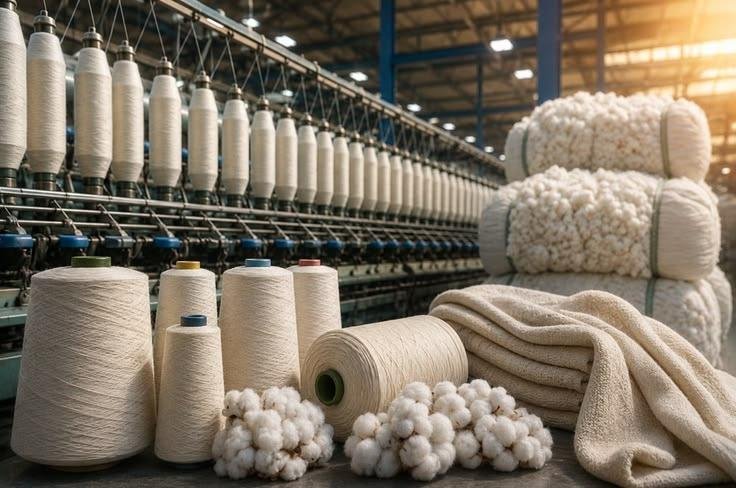
What is required to convert raw cotton into thread? If you would like detailed information on this, please visit our website, Todayalljobs24.
Many companies are looking for employees who have experience in making thread from cotton. Hire them. In this entire article, I will tell you in detail how to make thread from cotton, step by step.
There are five departments for making thread from cotton, which I will tell you about in this article, step by step. As
- Drawing Breaker Department
- Drawing Function Department
- Simplex Department
- Ring Department
- Conditioning room
Drawing-Breaker Department, Drawing Function Department, Simplex Department, Ring Department, and Conditioning Room—if you would like more information about these, please click on our website Todayalljobs24.
Drawing Breaker Department
In this, five ponies, like the one that came out of the card machine, will be placed behind the drawing breaker, and we will give it a draft; that is, we will draw it, mix the five, and draw it, and the machine will make a pony on its output and give it to us.
We are pulling so that the five different card machine pawns we have installed in the back can mix and become even more mixed, and this five-to-one product is being made; mixing and blending is happening here, cotton.
If you would like to learn more about the Drawing Breaker department, please click on our website Todayalljobs24.
Drawing Function Department
In addition, the ponies that have come out of the breaker will be mixed six by six and put behind this machine, and this machine will then mix it, blend it, create tension, and pull it to make a poney and give it to us.
We will collect it in a can. It weighs about 17 to 18 kg. It is made of cotton from different areas. We buy cotton from different areas.
There is a lot of difference in cotton from different areas in Pakistan. It varies a little bit depending on the humidity. So we have to make a homogeneous mixture of cotton by mixing it well so that a perfectly level thread can be made.
We do not have any variation in it. In fact, we are eliminating variations in cotton from different regions, step by step.
Table of Contents
The one that became one of the five ponies on the first breaker drawing out of five and this one that became one; we will put six of these together and put them behind the function drawing, and this one will come out as one of the six on the next output.
If we want to make combed yarn, we have to give it an extra process, which we call the combing process. That yarn is very clean and soft; it does not have small fibers in it.
Combing means combing, like when we comb cotton; it removes the small and broken fibers, leaving the long fibers. The thread made from combed cotton is very soft, and the fabric made from it is of good quality.
After that, we take the sliver with the comb to the Simplex Department.
Simplex Department
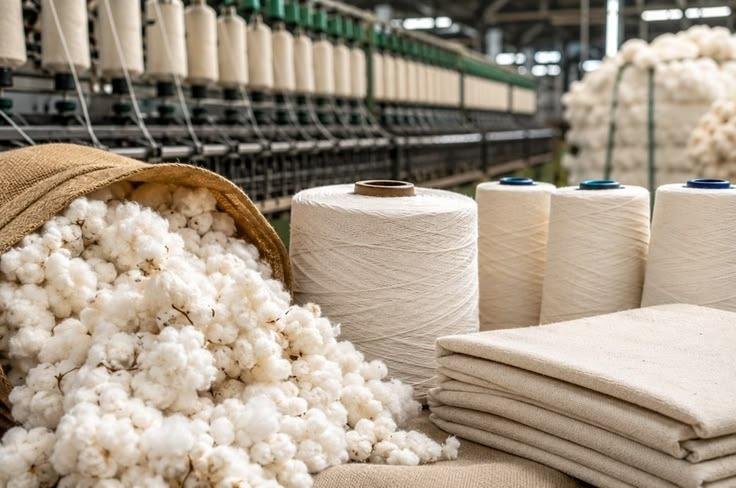
We put this sliver behind the simplex machine. It gives it more draft, creates tension, pulls this sliver, and this is the first point where we also give the sliver a little twist.
There is a package, a long plastic bag; we are also wrapping it in it. That is, for the first time here in the package form, the ponytail that we have is getting thinner; one is getting thinner, it is also being toasted, and they are wrapping it in a package.
The machine is wrapping it; it is becoming like a tube. Earlier, it was inside plastic bags; it was moving from one department to another department to the third department. Now it has come in the form of a package in the form of a tube.
If you would like to learn more about the Simplex Department, please click on our website Todayalljobs24.
Ring Department
We put that package with the simplex in it; we put it on the feeding of this machine, and this machine now gives us a draft as per the requirement, according to how thick or thin the thread we have to make.
Here we give the draft and give it together. After giving the draft, we make a small package here; there is a small tube on which we wrap this thread; this machine wraps it.
After wrapping our thread, it becomes almost final. Here is the final product: our thread is what it is; here is what it is.
Here, we roll it according to our demand, according to the type of thread we have. Here, that is, we have to make thread for T-shirts; here we have to make it for clothes; here we have to make it for weaving mills; here we have to make it for towels.
Whatever kind of thread we want to make, there are about 40 grams to 55 grams of thread on this tube.
Autocon Department
The thread we made in the color was on a small tube; its weight was only 40 to 60 grams. We call it a bobbin. A bobbin with thread. Actually, it is much smaller. We get these bobbins of 40 grams or 60 grams.
We put them together and make a big package. The machine that makes it is made by the machine. It makes a big package from the small packages, which is our final package.
The weight of the big package is about 1800 to 1900 grams. Up to 1900 grams.
We apply a special color tube to each thickness of yarn for identification purposes, to keep it separate from the rest. We apply a special color paper to the cone so that it does not get mixed up.
The weight of each cone and each package is checked. There is a standard weight. According to this, we weigh the yarn. After weighing it, we load it on a trolley on a pallet.
We then physically check the packages in the shade room or in the checking room to see if any of the packages or cones are faulty.
To know more about what else is in the Ring Department and what the SO feature is, click on our website Todayalljobs24.
Conditioning room
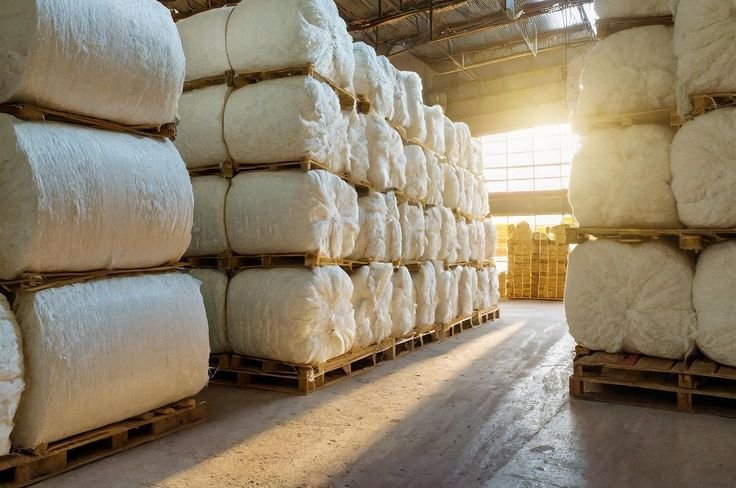
After the final inspection, these bales are brought to the conditioning room where we give them a special moisture level. According to international standards, the moisture has to be kept for 24 hours, up to seven to eight percent, so that it gains strength.
If we give so much moisture to the cotton, then its thread becomes strong so that when it is used on a loom or knitting machine, it does not break, and the thread does not break again and again.
The thread has been finalized; it is at the very end, and its roll has become final. Now it will be kept in the conditioning room; after keeping it there for 24 hours, it will then be packed separately.
After packing it separately, they will make their rolls, and then the final one will be delivered to the client, and the client will make clothes from it. It depends on the thickness of this thread. It will be made into a shirt, a towel, a pair of pants, or anything else.
These are the steps for making thread from cotton, which we have told you step by step in this article.
https://www.slideshare.net/slideshow/cotton-yarn-manufacturing-process