Many companies are looking for people to produce smartphones. Hire people who have experience in smartphone production and packaging. In today’s article, I will tell you in detail how the complete process from smartphone production to packaging works.
If you want to know in detail how a Realme smartphone is made, click on our website Todayalljobs24.
First, we’ll cover three stages: assembly, quality checks (or testing), and packaging.
Production Unit
The material—known as TPC—arrives here and is unloaded; it is inspected in China and then inspected again here. Let me actually take it out and show it to you; this is the form in which the product arrives in Pakistan.
Subsequently, the assembly of components like the motherboard, camera, and battery takes place right here; quality assurance also takes place here; I have already explained the TBC process to you, so the next stage is the installation of the motherboard.
If you want to know more about the production unit in detail, click on our website Todayalljobs24.
Motherboard
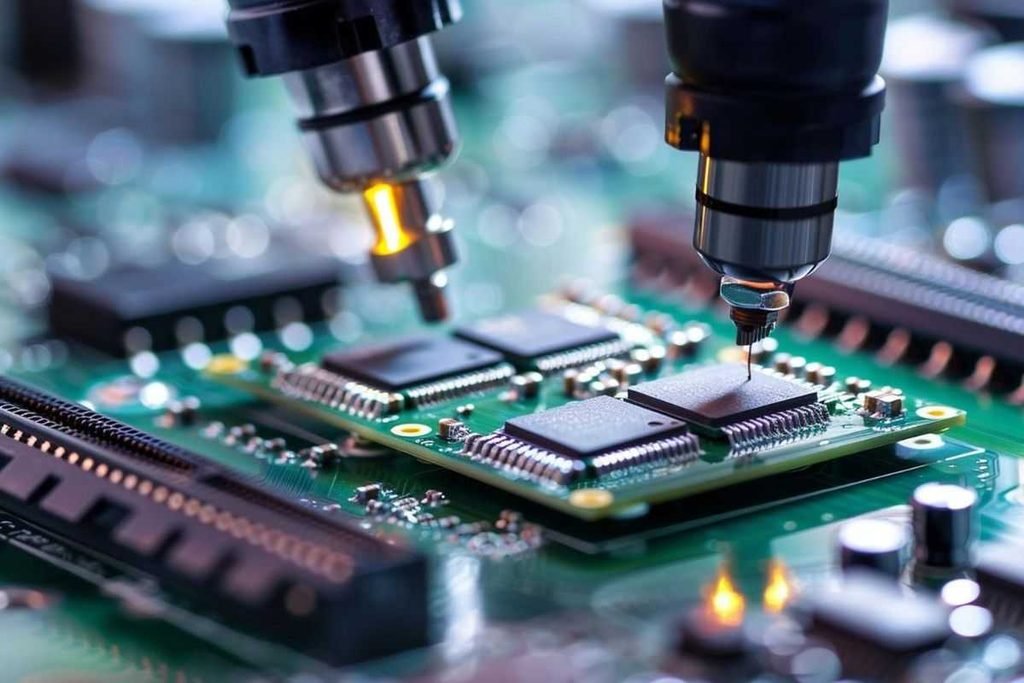
Now, this is the TPC unit; a silicone sleeve is fitted here, covering the USB ports, as well as the connections for the hands-free and volume buttons. A ribbon cable is attached here to establish the connection with the motherboard. After installing all of this, we move to the next stage, where the motherboard is fitted into the phone.
If you would like to learn about motherboards, please click on our website Todayalljobs24.
Motherboard Connector
After installing all of this, we move it to the next stage, where the motherboard is fitted into the phone. The section where we send the phone to have the front camera installed is covered on all sides with a thick sheet; the reason for this covering is essentially that the mobile camera is a highly sensitive component.
The “clean sheet” is designed specifically to control dust; once the protective foam covering the camera is removed, the lens is at risk of accumulating dust, so the purpose of this clean sheet is to protect the camera.
After the motherboard, there is another important component where the RF cable connects—or, to put it simply, where the antenna attaches. In the past, antennas used to be large, but now the design has become very sleek. Following the RF cable, the next important step involves the installation of the rear cameras; they are being installed with great precision.
Next, the C-plate is pressed into place, followed by the component known as the fingerprint bracket—this is where the fingerprint sensor is mounted. Then comes an impressive setup where the board is installed. After the cover is placed, an automated machine drives in the screws.
Once the screws are secured, a fine seal—often referred to as a “seal”—is applied; this serves to verify the device’s factory-original status and ensures no unauthorized external repairs have been performed, thereby keeping your phone secure.
Subsequently, the battery is installed, and the fingerprint module is fitted. Building on the initial steps we described, the rear cameras and RF cable have now been connected, the battery is in place, and the screws have been fastened, completing the installation of components such as the USB ports and volume buttons.
Next, there is a biometric machine and a QR scanner; the scanning process is automated to verify that the components being installed actually belong to that specific mobile unit. For instance, if a component from a different mobile were used, the system would reject it—it wouldn’t clear until the correct component for that specific unit was used.
Following this, an internal cover is fitted, and then the back cover is attached; the back cover section is carefully sealed on all sides—primarily to protect the camera from any dust, a precaution taken despite the highly controlled environment.
With the assembly now complete—including the installation of the back cover and the battery section—a final simple cover is applied, marking the end of the assembly phase. The next stage is Quality Assurance—or testing—which is crucial and adheres to international standards; let me explain what the quality process entails.
Quality Testing
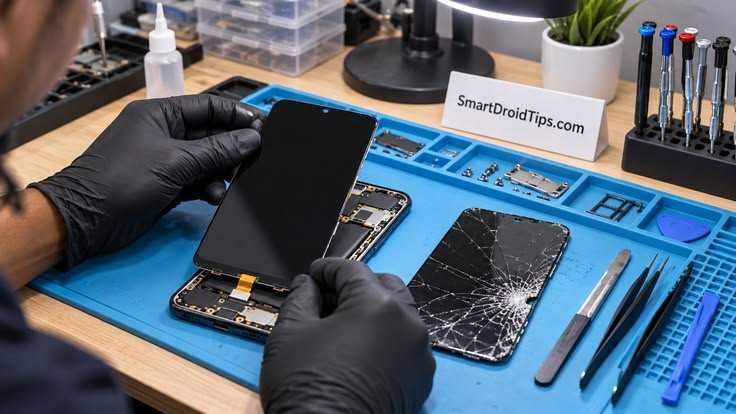
For testing purposes, the software is installed first; the software being installed is labeled “Test Only,” indicating it is strictly for testing. Following this, the hardware and software components undergo testing. Essentially, only the software installation takes place at this stage, while the testing of other product aspects follows in subsequent steps. Now, let me explain the quality control process, which is crucial: the LCD is inspected using a machine to detect any faults or dead pixels. After this quality assurance check, the calibration is verified, and subsequently, the flashlight is tested.
After the flashlight, the OTG and all other ports are tested; additionally, the camera is checked. Alongside the camera check, functional testing—or what we might call software testing—is performed to verify that all the device’s features are working correctly.
During the quality test, the GPS is checked to ensure it is functioning correctly, and the antenna responsible for signal reception in the Realme phone is tested. Following these tests, a protective lamination or cover is applied to the phone with great precision and care.
After lamination, the device undergoes another inspection; the lamination is applied only after a meticulous check. Following lamination, the ports are installed, and a comprehensive check is conducted to ensure, for instance, that the logo isn’t misprinted and that the speakerphone and all jacks are correctly installed.
Once this level of perfection is achieved, the phone moves to the next stage—the final quality assurance phase—where both hardware and software are thoroughly tested using modern machinery and precise, streamlined procedures. Finally, the device is packaged; let me show you how the Realme packaging process works.
If you would like to learn more details about smartphone quality testing, please click on our website Todayalljobs24.
Packaging Department
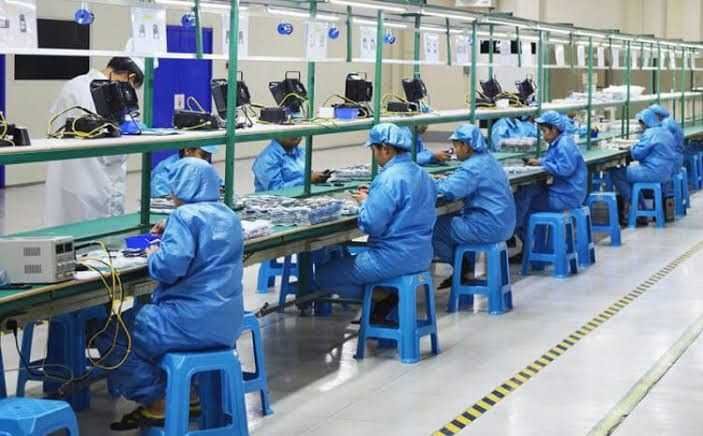
In the packaging department, the process begins with affixing the IMEI sticker to the phone and verifying that it matches the device’s actual IMEI; if the sticker were incorrect—heaven forbid—the phone would be rejected and sent back immediately. Next, the user interface is installed—this is the software and graphics responsible for the beautiful display on your Realme phone.
Following this is a crucial step: the phone’s barcode is scanned to verify its identity. The phone is then placed into a slot where it undergoes a system reset. This reset is necessary because various temporary files often accumulate during the quality assurance and testing phases; clearing them ensures the phone is in a pristine state for the end user.
Afterward, the packaging process begins, starting with the application of a barcode sticker. Further testing is conducted to catch any potential faults before finalization. Finally, the Realme phone is packed along with its relevant accessories—such as the adapter and cable—and the warranty card is included. Each barcode is scanned individually to ensure that all the enclosed accessories belong to that specific phone model and haven’t been mixed up with items from other products.
Once all these checks are completed… Once that is done, all the necessary accessories are packed; then, the SIM tray pin and stickers are inserted, and the box is laminated. Following lamination, the C25s are fully ready for the market, featuring beautiful packaging. Interestingly, it is not just mid-range models being produced here; this same production facility also manufactures premium-quality phones—high-end devices designed for quality-conscious consumers.